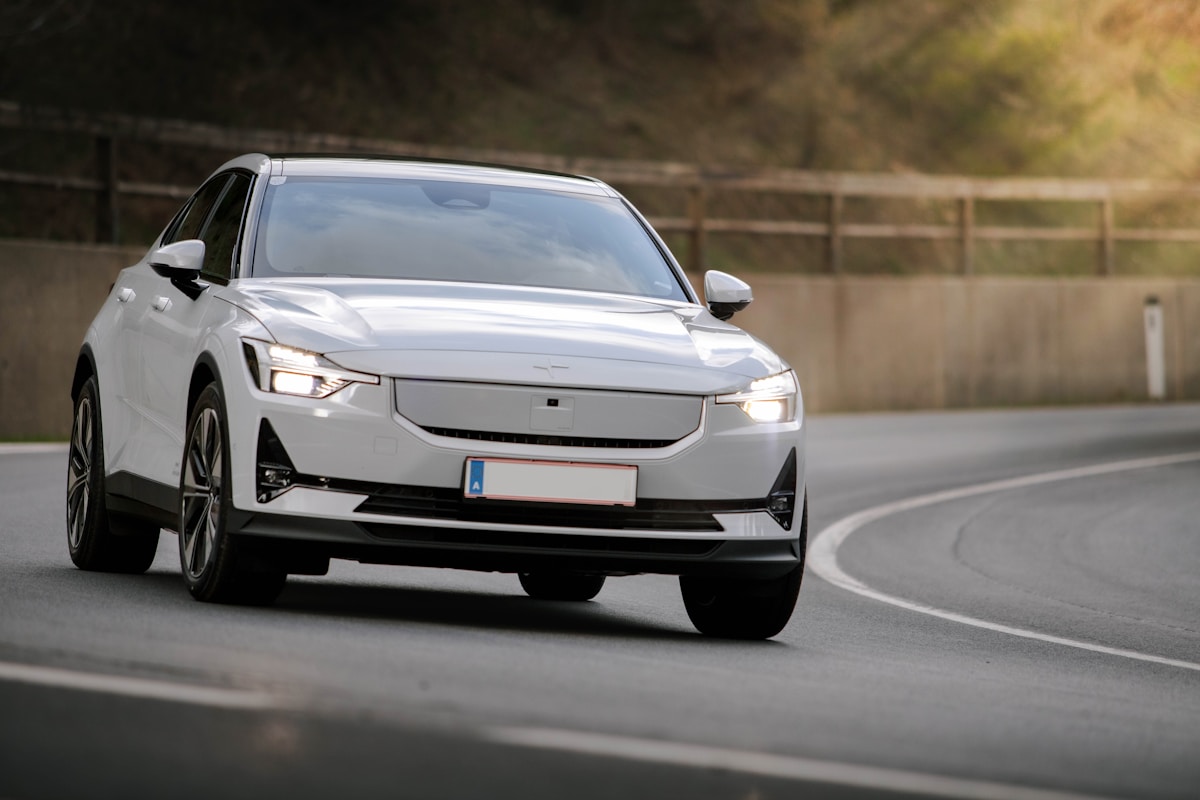
Tata Punch EV Review India 2026: Price, Range, Variants & Real-World Verdict
Facelifted, recharged, and now fitted with a 40 kWh long-range battery — here is the authoritative buyer’s breakdown.
Why the Tata Punch EV Still Matters in 2026
Two years after launch, the Punch EV is no longer just “the cheapest factory-built electric SUV in India”. With the early-2026 facelift, Tata Motors has pushed it into a category of its own: a sub-₹13-lakh electric SUV with a real-world city range comfortably above 250 km and a confirmed lifetime warranty on the high-voltage battery. The keyword for any honest tata punch ev review india 2026 is no longer “range anxiety” — it is “value engineering”.
Tata Motors’ passenger EV business sells more than two of every three electric cars registered in India, according to Vahan dashboard data published by the Ministry of Road Transport and Highways. The Punch EV alone has been the single biggest contributor to that lead, and the 2026 update is engineered to defend exactly that.
2026 Facelift: What Has Actually Changed
The headline change is the new 40 kWh LFP battery pack on the Long Range trims, replacing the older 35 kWh unit. Tata.ev’s official specifications page lists an ARAI-certified range of 468 km, with a C75 real-world figure of 335–355 km. The 30 kWh Medium Range pack continues, but with refined thermal management and a quoted 365–375 km ARAI / 260–275 km C75 range.
- New 40 kWh LFP pack on Long Range variants (Adventure, Empowered, Empowered Plus S)
- Lifetime HV battery warranty for the first private owner — a first in this segment
- Faster 50 kW DC charging (20–80% in ~26 minutes on the 40 kWh pack)
- Updated 10.25-inch infotainment with wireless Apple CarPlay & Android Auto across mid-trims
- Refreshed front fascia, sequential LED DRLs, and Arcade.ev app suite (in-car YouTube, Prime Video, JioSaavn)
- Six airbags standard from Smart Plus upward — meeting the BNCAP 5-star structural rating already held by the platform
Tata Punch EV 2026 Variants & Price (Ex-Showroom)
| Variant | Battery | ARAI Range | Price (₹) |
|---|---|---|---|
| Smart 30 kWh | 30 kWh | 365 km | 9.69 L |
| Smart Plus 30 kWh | 30 kWh | 365 km | 10.39 L |
| Adventure 40 kWh | 40 kWh | 468 km | 11.29 L |
| Empowered 40 kWh | 40 kWh | 468 km | 11.99 L |
| Empowered Plus S 40 kWh | 40 kWh | 468 km | 12.59 L |
Source: Tata.ev official price list, March 2026; cross-verified with CarDekho and CarWale variant pages.
Real-World Range: What the Punch EV Actually Delivers
ARAI numbers exist on paper. C75 — the new Indian real-world cycle — is closer to what owners experience. On the 40 kWh pack, expect:
- City driving (eco mode, AC on): 320–355 km per charge
- Mixed city + highway: 280–310 km
- Pure highway at 90–100 km/h: 230–260 km
- Summer with full AC + 4 occupants: ~10–12% additional drop
This puts the long-range Punch EV firmly in “weekend Mumbai–Pune or Bengaluru–Mysuru on a single charge” territory. The 30 kWh Medium Range pack is still best understood as a city-first car: 220–270 km comfortably, with one quick top-up needed for any inter-city trip.
Charging Ecosystem & Costs
The Punch EV uses a CCS-2 DC fast-charging port compatible with all major public networks — Tata Power EZ Charge, Statiq, ChargeZone, Glida, and the BHEL/REIL government rollouts under the FAME-III framework announced by the Ministry of Heavy Industries in 2026.
| Charger | Time (10–100%) | Approx. cost |
|---|---|---|
| 3.3 kW home AC (15 A socket) | ~10–12 hours | ₹240–₹320 (slab tariff) |
| 7.2 kW wall-box AC | ~5 hours | ₹240–₹320 |
| 50 kW DC fast (20–80%) | ~26 minutes | ₹420–₹540 |
For most buyers, a 7.2 kW home wall-box (₹35,000–₹65,000 installed including load upgrade) is the right configuration. For a deeper breakdown, see our guide to EV home charging setup cost in India.
Driving Dynamics & Comfort
The Punch EV rides on Tata’s acti.ev architecture — the same skateboard platform underpinning the Curvv EV and the upcoming Harrier EV. Crucially, this is a born-electric chassis, not an ICE conversion. That shows up in three places:
- Floor flatness: rear seat foot space is genuinely usable, unlike retrofitted EVs
- Low centre of gravity: body roll is well-contained for an SUV with 190 mm ground clearance
- Regen modes: four selectable levels, with the highest enabling near one-pedal driving in traffic
0–100 km/h on the Long Range trims is a manufacturer-claimed 9.5 seconds — quick enough to embarrass most petrol hatchbacks at traffic lights. Top speed is electronically limited to 130 km/h, sensible for the segment.
Safety & Warranty
Bharat NCAP has rated the Punch (ICE platform) at 5 stars for adult occupant protection. The EV adds reinforced battery cell-to-pack mounting and an IP67-rated battery housing. The 2026 facelift makes six airbags, ESC, hill-hold, and TPMS standard from Smart Plus upward. Tata’s warranty stack is now the strongest in the segment:
- Vehicle: 3 years / unlimited km (extendable to 5 years)
- HV battery: Lifetime, first private owner
- Motor & controller: 8 years / 1,60,000 km
Tata Punch EV vs the Competition
Within ₹15 lakh, the Punch EV competes head-on with the MG Comet EV, the upcoming Hyundai Inster, and — at the upper end — the MG Windsor EV BaaS variants. For a deep dive on the closest fight, read our comparison: Tata Punch EV vs MG Comet EV: Which Cheap EV Makes Sense? If you are willing to stretch a little, also look at our shortlist of the Best EVs Under ₹15 Lakh in India (2026).
Pros & Cons
What works
- Most affordable factory-built electric SUV in India
- Genuine ~340 km city range on 40 kWh pack
- Lifetime HV battery warranty — a category-defining move
- Born-electric platform, not an ICE retrofit
- Pan-India Tata service network with 350+ EV-trained workshops
What does not
- Boot space (366 L) is tighter than Nexon EV
- Rear seat under-thigh support is average for taller adults
- Top trim crosses ₹14 lakh on-road in most metros
- 50 kW DC peak charging is now mid-pack vs newer 100 kW-capable rivals
Who Should Buy the Tata Punch EV in 2026
The Punch EV is the right car for: first-time EV buyers transitioning from a petrol hatchback or compact SUV; urban families needing a daily 30–60 km commuter with occasional 200 km weekend runs; and second-car households where a city EV makes more financial sense than a third petrol vehicle. It is not the right car for buyers who routinely drive 300+ km per day on highways — the Nexon EV Long Range or Curvv EV Long Range serves that use case better.
Verdict
For 2026, the Tata Punch EV facelift does the most important thing a mass-market EV can do: it removes the last remaining excuses. The 40 kWh battery dissolves city range anxiety, the lifetime battery warranty dissolves resale anxiety, and the ₹9.69 lakh starting price keeps it within reach of every household currently shopping a Maruti Brezza or Hyundai Venue. It is, in short, the most rational electric SUV purchase in India today — provided your driving profile lives mostly inside city limits with the occasional intercity run.
Is the Tata Punch EV worth buying in 2026?
Yes, especially the 40 kWh Long Range variants. With ~340 km of real-world city range, a lifetime battery warranty, and a sub-₹13-lakh ex-showroom price, it is the most defensible value purchase in the entry-level electric SUV segment.
What is the real-world range of the Tata Punch EV 40 kWh?
Tata.ev officially quotes a C75 real-world range of 335–355 km. Owner reports and editorial road tests place the typical city figure at 320–355 km and highway figure at 230–260 km, depending on speed, AC use, and load.
How long does it take to charge the Punch EV?
About 26 minutes from 20% to 80% on a 50 kW DC fast charger (40 kWh pack), roughly 5 hours on a 7.2 kW home wall-box, and 10–12 hours on a standard 15 A wall socket using the 3.3 kW portable charger.
What is the price of the Tata Punch EV Long Range?
The 40 kWh Long Range variants start at ₹11.29 lakh (Adventure) and go up to ₹12.59 lakh (Empowered Plus S) ex-showroom, as per Tata.ev’s March 2026 price list.
Does the Tata Punch EV qualify for state EV subsidies?
Yes — most state EV policies (Maharashtra, Delhi, Gujarat, Telangana) extend road tax and registration waivers to the Punch EV. Direct purchase incentives vary by state. See our Electric Car Subsidy in India 2026 guide for the latest state-by-state breakdown.
Is the Tata Punch EV battery safe?
Tata uses an LFP (lithium iron phosphate) chemistry on the 40 kWh pack, IP67-rated for water and dust ingress, with cell-to-pack thermal management. The platform also holds a 5-star Bharat NCAP rating in its ICE form, with EV-specific reinforcements added.
Sources: Tata.ev official specifications and price list (ev.tatamotors.com), CarDekho variant pages, CarWale, 91Wheels, Bharat NCAP ratings, Vahan dashboard registrations (parivahan.gov.in), Ministry of Heavy Industries FAME-III communications.