Ola S1 Pro Long Term Review India 2026: Range, Battery, Service and Real Ownership Costs
Ola S1 Pro long term review India 2026 with real-world range expectations, battery warranty, service costs, charging, rivals and buying checklist.

Last updated: July 2026
Quick verdict: who should buy the Ola S1 Pro in 2026?
This Ola S1 Pro long term review India guide is written for buyers who are not satisfied with showroom claims alone. The S1 Pro remains one of India’s most talked-about premium electric scooters because it combines strong acceleration, connected features, a large battery pack, and a wide online-first buying experience. But a long-term ownership decision depends on more than the first test ride. It depends on commute distance, charging access, service response in your city, software stability, tyre wear, battery warranty, and whether your family is comfortable with the scooter’s weight and seat height.
If your daily riding is mostly urban, under 60 km, and you can charge at home or at work, the Ola S1 Pro can be a compelling petrol-scooter replacement. It is especially attractive for riders who value fast pickup, a modern dashboard, navigation, app controls, and low running cost. If your use case involves rough rural roads, frequent pillion rides over broken surfaces, or no predictable charging point, you should compare it carefully with alternatives before booking. The right answer is not simply “buy” or “avoid”; it is whether the scooter matches your charging routine and service expectations.
For broader context, also read EV-Wala’s internal guides on electric scooters, EV charging stations near me India, home EV charger installation India, electric scooter vs electric car India, and electric vehicle maintenance cost India.
Real-world range: what to expect in Indian traffic
Range is the first question every buyer asks, and it is also the most misunderstood. Certified range numbers are useful for comparing scooters under standard test conditions, but Indian riding conditions vary sharply. A 55 kg solo rider in Eco mode on smooth city roads will see a different result from a 90 kg rider carrying a pillion, climbing flyovers, using Hyper mode, and braking repeatedly in summer traffic. In practical ownership, the Ola S1 Pro is best evaluated by your daily distance plus a safety buffer rather than by the brochure maximum.
For many city riders, a realistic planning range between roughly 90 km and 130 km per charge is a sensible expectation depending on mode, speed, payload, road surface, tyre pressure, and weather. Conservative riders can stretch it, while aggressive riders will reduce it quickly. The scooter’s strong performance tempts owners to use quicker modes often, and that is where range drops. If your daily commute is 25 km each way, the S1 Pro should generally fit comfortably with home charging. If your daily distance is 80 km or more, you need disciplined charging habits and a backup plan for unexpected errands.
The smarter way to assess range is to calculate weekly energy needs. A rider doing 40 km a day for six days covers 240 km weekly. Even if the scooter comfortably delivers around 100 km per charge in mixed use, charging three times a week is manageable. But if your parking space has no plug point and you depend entirely on public charging, ownership becomes less convenient. Electric scooters are at their best when charging happens passively overnight, not as a separate chore.
Battery, warranty and degradation after long-term use
The battery is the most expensive component in any electric two-wheeler. Long-term owners should focus on warranty terms, charging behaviour, and heat management. Ola’s warranty coverage and exact policy details can change by variant and purchase date, so buyers should verify the current terms on the official product page and invoice before payment. The Ministry of Road Transport and Highways also publishes regulatory updates relevant to vehicles and safety at MoRTH, while broad electric mobility policy details can be tracked through India’s Ministry of Heavy Industries.
Battery degradation is normal, but it should be gradual. Owners can protect battery health by avoiding unnecessary deep discharge, not leaving the scooter at very low charge for long periods, using recommended charging equipment, parking in shade where possible, and updating software when stable releases are available. Heat is important in India. A scooter parked daily under harsh sun and ridden aggressively in peak summer may experience more thermal stress than one parked in a covered basement.
One reassuring point is that most urban commutes use only a portion of the battery each day. This means owners can keep the scooter within a comfortable state-of-charge band instead of draining it fully. For families shifting from a petrol scooter, the mental model changes: you do not wait until “reserve”; you plug in when convenient, like a phone. A predictable charging routine is more valuable than chasing every kilometre of theoretical range.
Performance, ride comfort and city usability
The Ola S1 Pro’s biggest strength is its lively performance. It feels quick off the line, which is useful for traffic gaps, flyovers, and overtakes at city speeds. The acceleration also makes the scooter feel premium compared with many conventional petrol scooters. However, strong performance should be used responsibly. New EV riders sometimes underestimate how quickly an electric scooter responds because torque arrives instantly. Smooth throttle control improves safety, tyre life, and range.
Ride comfort depends heavily on local roads. On smooth tarmac, the S1 Pro feels modern and stable. On sharp potholes, broken patches, and speed breakers, riders should test with a pillion before deciding. Seat comfort is subjective; a 15-minute showroom ride is not enough. If possible, borrow or rent for a longer city loop that includes the same roads you use daily. Check low-speed balance, U-turn ease, parking effort, and whether all family members can comfortably place their feet and handle the scooter’s weight.
Storage and usability are strong reasons to consider an electric scooter. Under-seat storage helps with helmets, bags, rain gear, and office items. The digital dashboard and connected functions are attractive, but they should not distract from basics such as braking feel, mirror visibility, side-stand behaviour, lighting, and service access. Features are nice; dependable daily transport is the real benchmark.
Service experience and software: the long-term ownership wildcard
Service is the area where buyer experience can vary the most by city. A scooter may be excellent mechanically, but if your nearest service touchpoint is overloaded, long-term satisfaction suffers. Before buying, search owner groups for your specific city, not just national reviews. Ask about appointment availability, parts wait times, pickup and drop support, software issue resolution, and how warranty claims are handled. A good local service centre can make ownership easy; a weak one can turn small issues into frustration.
Software is central to the Ola ecosystem. Updates can improve features, ride modes, navigation, charging behaviour, and user interface. They can also introduce temporary bugs. Long-term owners should avoid panic after every online complaint but should also be realistic: a connected scooter is partly a software product. If you prefer a completely simple, analogue ownership experience, a high-tech scooter may not be your ideal match. If you enjoy app features and regular updates, the S1 Pro’s approach will feel familiar.
Practical pre-delivery checks matter. Inspect panel gaps, brakes, tyres, lights, charger condition, app pairing, charging port fit, dashboard functions, horn, indicators, and documents before accepting delivery. Keep photos of the scooter and invoice. Confirm warranty start date, roadside assistance terms, and service escalation channels. These small steps reduce stress later.
Ownership cost: electricity, tyres, brakes and insurance
The strongest financial argument for the Ola S1 Pro is low energy cost. Electricity for a full charge is usually far cheaper than petrol for the same city distance. Exact savings depend on local electricity tariff and petrol price, but high-mileage riders benefit the most. A rider covering 1,000 km per month can recover the premium faster than a rider covering only 200 km per month. Use your actual monthly kilometres, not a generic internet estimate.
Maintenance is different from petrol scooters. There is no engine oil change, spark plug, clutch, or exhaust system. But tyres, brake pads, suspension parts, bearings, lights, body panels, and insurance still matter. EV tyres can wear faster if riders constantly use hard acceleration. Regenerative braking may reduce brake pad wear, but it does not eliminate mechanical maintenance. Insurance pricing also varies by IDV, add-ons, city, claims history, and insurer. For related four-wheeler context, EV-Wala’s electric car insurance cost India 2026 guide explains how EV insurance thinking differs from ICE vehicles.
Depreciation is another factor. The used electric scooter market is still maturing. Buyers may discount older scooters if battery health is unclear, warranty is near expiry, or service records are missing. Keep service invoices, update records, and charging accessories in good condition. A well-documented EV should be easier to resell than one with missing history. EV-Wala’s EV resale value India 2026 guide covers the same principle for larger EVs.
Ola S1 Pro vs alternatives: comparison table
| Scooter | Best for | Key strength | Buyer caution | Ideal daily use |
|---|---|---|---|---|
| Ola S1 Pro | Tech-focused urban riders | Strong performance, features, large battery feel | Check city service feedback and software stability | 25-70 km with home charging |
| Ather 450X | Riders wanting polished handling | Sporty dynamics and mature ecosystem | Range may feel tighter for heavy users | 20-55 km city commute |
| TVS iQube | Family buyers seeking familiarity | Comfortable, practical, dealer-led support | Less aggressive performance image | 15-60 km mixed family use |
| Bajaj Chetak | Premium conservative buyers | Solid build feel and brand trust | Feature and performance priorities differ by variant | 15-50 km urban errands |
Charging routine: the make-or-break factor
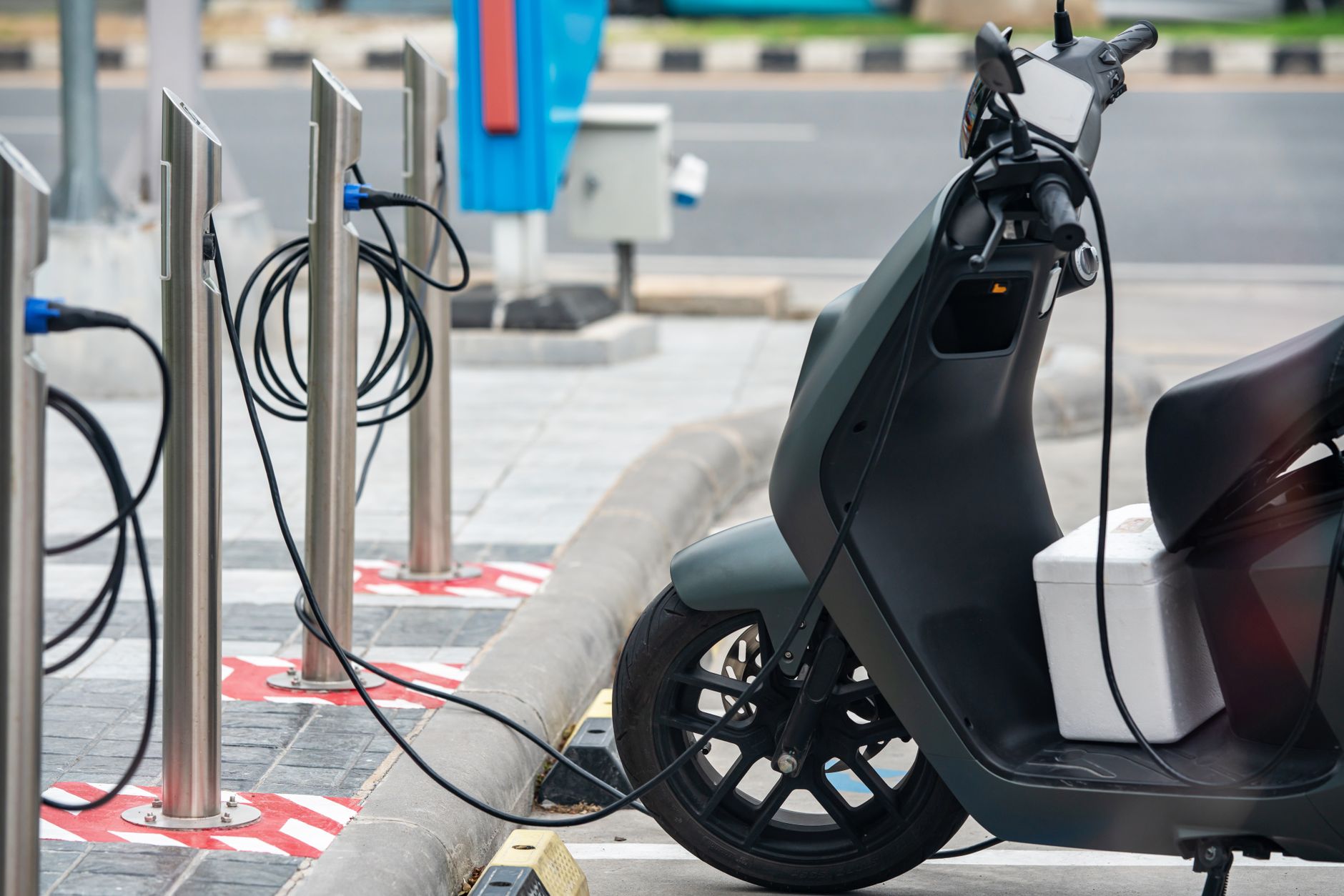
Charging access is more important than any single feature. If you live in an apartment, confirm society permission, plug location, safety rules, billing arrangement, and cable routing before booking. Do not assume you can run an extension wire from any random socket. A safe, weather-protected, properly rated charging point is the foundation of EV ownership. If your building refuses charging access, consider whether a removable-battery scooter or a petrol scooter is more practical until infrastructure improves.
Public charging is improving, but two-wheeler charging still depends on compatibility, location, uptime, and parking convenience. For most scooter owners, public chargers are a backup rather than the main plan. The Central Electricity Authority publishes power-sector information at CEA, and state DISCOM rules may affect home charging arrangements. Always follow manufacturer instructions and avoid unsafe jugaad wiring.
A good routine is simple: charge after two or three commute days, keep a buffer for unexpected errands, and avoid reaching home at 3 percent unless necessary. In monsoon, be extra careful with waterlogged roads and charging equipment. Modern EVs are designed with safety standards, but riders should still avoid deep water, damaged cables, and exposed sockets.
Buying checklist before you book
First, calculate your daily kilometres. Add a 30 percent buffer for detours, traffic, battery ageing, and weather. Second, confirm charging. A dedicated home or workplace plug changes the ownership experience completely. Third, test ride with the person who will actually use the scooter daily. Fourth, check local service feedback. Fifth, compare total cost over three years rather than only ex-showroom price.
Also verify current subsidies, registration charges, insurance, charger inclusions, delivery timeline, cancellation policy, and extended warranty options. EV policies have changed several times in India, so do not rely on an old YouTube video or a friend’s invoice from last year. Ask the dealer or online sales team for the on-road breakup in writing. Compare it with state transport portal information and keep copies of every payment receipt.
If you are upgrading from a petrol scooter, take one week to adjust your riding style. Smooth acceleration, correct tyre pressure, planned charging, and gentle braking improve range and comfort. Electric scooters reward calm riders. The S1 Pro can be quick, but the best ownership experience comes from using that performance only when needed.
Final verdict
The Ola S1 Pro remains a strong premium electric scooter choice in India for riders who want performance, features, and low running cost. It is not the automatic best choice for everyone. The purchase makes the most sense when you have reliable charging, a supportive service touchpoint nearby, a commute within realistic range limits, and comfort with a connected software-led product. If those boxes are checked, it can be a satisfying long-term replacement for a petrol scooter. If charging or service is uncertain, shortlist Ather, TVS, Bajaj and other local options before deciding.
The practical recommendation is clear: do not buy only because of claimed range or online hype. Buy after a proper test ride, a charging plan, a service check, and a three-year cost calculation. That is how an electric scooter becomes a dependable daily vehicle rather than an experiment.
FAQ
Is the Ola S1 Pro good for daily commuting in India?
Yes, it can be very good for daily commuting if your route is mostly urban and you have reliable charging. Riders with 25-70 km daily use are likely to find it practical, while very high-mileage users should plan charging carefully.
What real-world range should I expect from the Ola S1 Pro?
Many owners should plan around roughly 90-130 km depending on mode, speed, payload, tyre pressure, weather and traffic. Aggressive riding and frequent high-speed use reduce range.
Is home charging necessary for an electric scooter?
It is not legally necessary, but it is strongly recommended. Home or workplace charging makes ownership convenient and reduces dependence on public charger availability.
How expensive is Ola S1 Pro maintenance?
Routine EV maintenance is usually lower than a petrol scooter because there is no engine oil or clutch system, but tyres, brakes, suspension, insurance and occasional parts still cost money.
Should I buy Ola S1 Pro or Ather 450X?
Choose the Ola S1 Pro if you prioritise strong performance, features and battery capacity feel. Choose the Ather 450X if you prefer sharp handling and a mature sporty ecosystem. In both cases, local service quality should influence your decision.
EV-Wala editorial desk
Practical electric mobility coverage for Indian roads, budgets, and charging realities. Read our editorial standards and methodology.